
Who isn't familiar with those videos on YouTube where the speaker begins by saying, ‘Let me show you my workflow’? Then the speaker opens some image editing programme. A photographer's workflow begins long before the first picture is taken.
A professional photographer rarely just starts shooting. Behind every photo is a clear process that has been thought through from the initial idea to the final image output. This workflow not only ensures consistent results, but also saves time and energy.

Work systematically
A successful photography project thrives not only on creativity, but also on a clear, systematic approach. From the initial idea to the final image selection, a structured approach helps to save time and achieve high-quality results. Creativity needs structure:
The IPDRCE model creates this structure.
- I= Information, in this phase I gather the information.
- P= Planning, in this phase, various plans are prepared (mood board, checklists).
- D= Decision, at some point, you have to decide on a plan.
- R= Realisation, the plan is implemented with the help of the checklists.
- C= Control, in this phase, the completed work is checked.
- E= Evaluation, in this phase, the work is evaluated so that the experience can be incorporated into future projects.
1. Inspiration and planning
It all starts with an idea: a mood board, a concept or a specific request from a client. In this phase, the photographer determines the style, plans the location, lighting and props, and selects the appropriate equipment. Communication with the client or team is crucial here in order to align expectations and objectives. Many assignments also involve an advertising agency, which contributes its own ideas to the team. However, it is also important to know the printing provider during the planning phase in order to achieve high colour fidelity.
Normality is a paved road;
it's easy to walk on, but no flowers grow on it.
Vincent van Gogh
2. Preparation and organisation
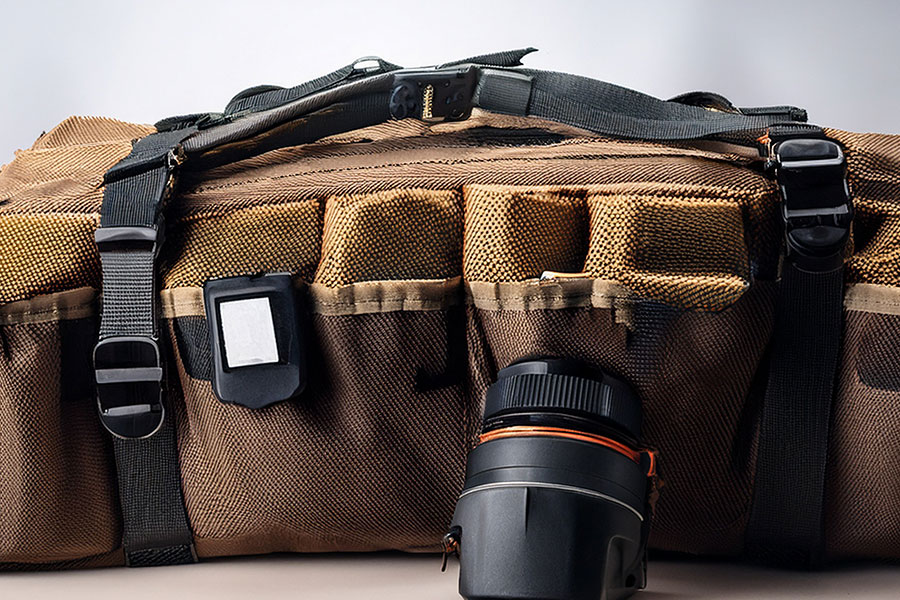
Even before the camera clicks, there is a lot to do: charging batteries, formatting memory cards, cleaning lenses and cameras. A structured photographer often creates a checklist to ensure that nothing is missing on set. Organisational aspects such as model contracts, location permits or schedules also belong in this phase.
3. The shoot
Technology and creativity merge on set. The photographer consciously selects perspectives, image sections and exposures while reacting flexibly to the situation – be it changing light, spontaneous ideas or interaction with the model. Meanwhile, images are often checked on the camera display or a laptop to ensure that the quality is right.
4. Data backup
After the shoot, the top priority is: Backup! The raw files are backed up at least twice – e.g. on an external hard drive and in the cloud. This minimises the risk of data loss for the photographer. Personally, I usually store the raw data on a Raid Level 5 server.
5. Image selection (culling)
Not every photo makes it into the final selection. The photographer uses special software to sort the images: technically flawed or duplicate images are discarded, and the best motifs are marked. This step requires a trained eye and sometimes patience.
6. Image editing
Creative refinement follows in programmes such as Lightroom or Photoshop: colour corrections, contrasts, retouching of skin or distracting details, and possibly also compositing. The editing style reflects the photographer's signature – whether natural, dramatic, minimalist or artistic.
7. Output and presentation
The final step is delivery to the customer or publication. This can take the form of high-resolution files, online galleries, fine art prints or social media content. Many photographers also create a watermark or prepare the images in different formats, depending on the intended use.
8. Archiving and follow-up
Finally, the final images are systematically archived, often with keywords and metadata. This ensures that they can still be easily found years later. A professional photographer also reflects on the process: what went well, what can be optimised next time?
Conclusion
A structured approach helps to avoid mishaps and stressful situations. You can't take great pictures with a forgotten memory card or an empty camera battery. Because the worst pictures are always the ones you didn't take. A calm and confident demeanour also has an effect on the people around you. Especially when I photograph people, it has a strong effect on the subjects. If I am unsure of myself, I make those around me feel unsure.
But the most important thing is always the post-processing, because without it, no learning process can develop. The same mistake should only be made once.


