
Normally, I wait until cameras like the Nikon ZR are available in stores. But the wave of early hate triggers me: behind the RED codec and compact design lies pure strategic gold. The mistake lies in viewing this camera from a limited perspective. But we photographers, of all people, should be masters of changing perspectives. Why is Nikon shaking up the market with this? The announcement of the Nikon ZR on 10 September 2025 was more than just the introduction of a new camera. It was a strategic statement. Because the ZR is not only Nikon's first true cinema-oriented camera – it is also part of a deeper alliance with RED Digital Cinema.
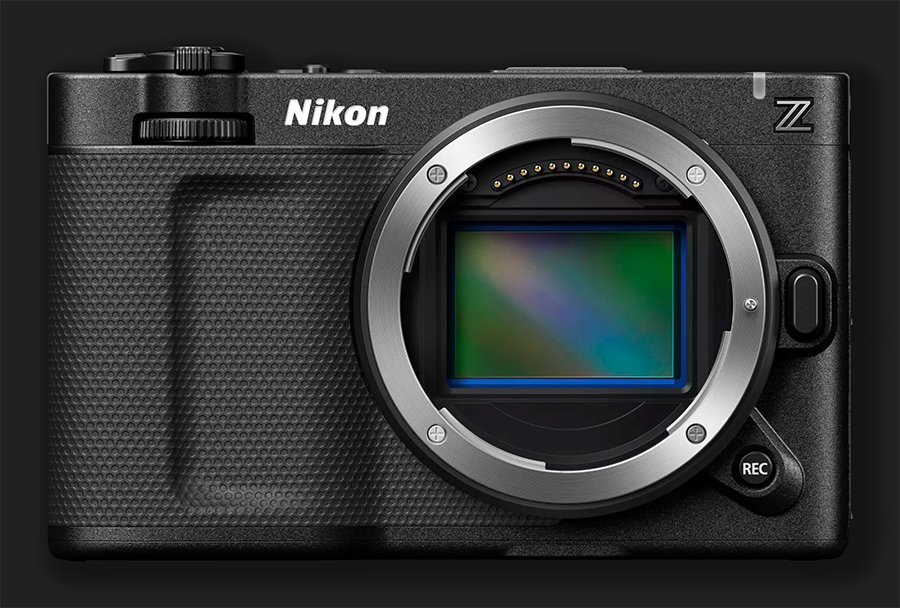
Nikon ZR, RED & the Z-mount – a strategic alliance
The Nikon ZR is not just a new camera – it is also a signal of how Nikon and RED intend to work more closely together in the camera market in future.
Since its introduction in 2018, the Nikon Z-mount has been considered one of the most advanced mounting systems for mirrorless cameras. It impresses with: - a large diameter of 55 mm, - a very short flange focal distance of only 16 mm, - and high flexibility for a wide variety of lens designs. It is precisely in this respect that Nikon beats all its competitors with its Z-mount; the PL-mount and EL-mount have a diameter of only 54 mm. However, this one millimetre is the decisive advantage, as it offers 89 mm2 more space for distortion correction. The additional optical glass required for this larger Z-mount is offset by the shorter flange focal distance, as chromatic aberration has less of an effect on the result with this flange focal distance. Chromatic aberration is caused by the refractive index of glass, which must be compensated for in high-quality optical systems by using glass with different refractive indices (crown glass, flint glass). But what causes engineers more computing work is the path of light in which they do not penetrate any glass. These are the scatter circles, which must be kept as small as possible in order to produce greater sharpness and less chromatic aberration.
1. Z-mount as standardisation
What was previously used mainly in the photo and hybrid sector is now finding its way into the cinema segment. Not only does the Nikon ZR rely on the Z-mount, but the new RED Raptor and RED Komodo-X also support it. This opens up a new era: Nikon lenses – and all third-party manufacturers that build Z-mounts – can now be used directly in RED's high-end cameras.

-
- The Nikon ZR naturally uses the Z-bayonet, but the key point is that the new RED Raptor and RED Komodo-X can also be used with the Z-mount.
- This opens up the Z ecosystem fully to the cinema segment for the first time – precisely where Canon EF, PL or E-mount have dominated until now.
- Nikon is thus positioning itself not only as a camera manufacturer, but also as a lens standard-setter in the cinema sector.
2. Expansion of the lens market
- For Nikon, this means that the more cameras with Z-mounts there are, the larger the market for Z lenses will become.
- Particularly exciting are niche products such as anamorphic lenses. These have been expensive up to now because production numbers are small.
- With a growing user base thanks to RED + Nikon, demand could rise sharply – which in turn would push down prices and attract more manufacturers (Sirui, Laowa, Viltrox, perhaps even Nikon itself) to the market.
3. Win-win for Nikon and RED
- Nikon wins:
- Larger Z-mount ecosystem → more lens sales
- Positioning as a player in the cine segment without having to develop a complete RED competitor camera
- RED wins:
- Access to a broad, relatively inexpensive Z lens portfolio
- Access to a broader market segment (e.g. content creators, indie filmmakers) that previously found RED too expensive
- More flexibility for users who don't want to rely on expensive PL or EF cine lenses
4. The strategic lever: the Nikon ZR
Lens systems are only as strong as their user base. For Nikon, opening up to RED means: - More demand for Z lenses: Suddenly, not only photographers and hybrid shooters are interested in the system, but also cine productions and filmmakers. - Stronger market position against Canon EF, Sony E and PL: Where EF and PL have dominated until now, Z-mount is now emerging as a serious alternative.
This step is particularly exciting for niche lenses such as anamorphic lenses. These ‘amorphic lenses’ have been expensive up to now because production numbers are low. But if both Nikon ZR users and RED filmmakers use the Z-mount, demand will increase. This means:
- Higher production volumes → lower production costs - More manufacturers (Sirui, Laowa, Viltrox, possibly Nikon itself) are entering the
- market - Prices for anamorphic lenses could fall, reaching a wider target group. The problem with anamorphic lenses is the high cost of purchasing the tools for manufacturing them when production volumes are low.
The ZR is essentially a bridge camera:
- Low enough in price to attract many new users to the system.
- Technically close enough to professional workflows (6K, RED RAW) to ensure a smooth transition to the RED system.
- This makes it a market accelerator for Z lenses, which will also benefit RED users in the long term.
Conclusion: More than just a camera
The Nikon ZR is not only a technical innovation, but also a strategic piece of the puzzle. Together with RED, Nikon is driving forward the standardisation of the Z-mount in the cine sector. The goal: larger quantities of lenses, broader market acceptance and falling prices, even in specialised segments such as anamorphic lenses.
For filmmakers, this means more choice, more flexibility and potentially lower barriers to entry. For Nikon and RED, it means a win-win partnership that redefines the boundaries between photography, hybrid and cinema.
In short: The Nikon ZR is less of a single camera and more part of a larger strategy – to bring the Z-mount into the cinema sector and make specialised lenses (e.g. anamorphic lenses) more affordable through volume.


