Photography Luethi
  • Blog
    • Photography in general
    • Basics
    • Technology
    • Image Composition
    • Image processing
  • Portfolio
  1. You are here:  
  2. Home
  3. Blog

Blog

The myth of the „cinematic look" – Why it never existed

A buzzword meets film history reality

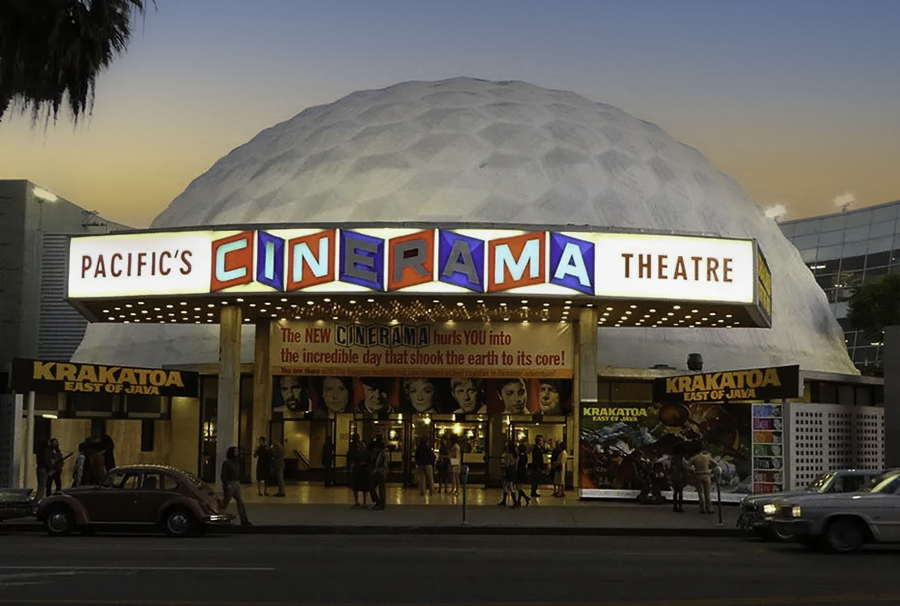
In today's world of digital moving images, the term ‘cinematic look’ has become an omnipresent buzzword. Social media tutorials promise to achieve it in five minutes, camera manufacturers advertise it, and content creators talk almost religiously about ways to make their videos ‘more cinematic’. The term serves as a collective term for everything that ‘somehow looks like cinema’: wide, soft, warm, dramatic.

But this modern usage is historically inaccurate. In its more than 120-year history, cinema has never had a uniform visual standard. On the contrary, it has been a constant laboratory of formats, techniques and aesthetics. Any attempt to define the ‘cinematic look’ as something fixed fails because of the enormous plurality of film history.

To understand why this look never existed, one must look to where today's ideas are often derived from: the technical diversity of formats in the 1950s and 60s, the era in which widescreen cinema was born – and yet was anything but homogeneous.

Cinerama Dome Hollywood

Read more: The myth of the „cinematic look" – Why it never existed

Everything has a beginning...

...and everything starts with a decision, including this blog. Over the past few years, I have repeatedly had to fight against myths that course and workshop participants had from social media. It is precisely these myths that I will be addressing here. But I also want to include entertaining and instructive topics. It also helps me if I can always refer to a written source.


Boote

Read more: Everything has a beginning...

Analogue renaissance, digital future

How the trend towards film photography could trigger new innovations

Analogue photography has been experiencing a remarkable renaissance in recent years. Young photographers are discovering film cameras – often out of curiosity, often out of a desire to slow down – and in doing so are bringing technologies, ways of thinking and workflows back into consciousness that had long been considered obsolete. But this trend is much more than a nostalgic play with retro optics. It has the potential to inspire digital photography both technically and conceptually.

Modular Hasselblad system

Read more: Analogue renaissance, digital future

Why it's sometimes better to hold off on buying a camera

As soon as a manufacturer announces a new camera, the photography world is gripped by ‘must-have fever’. Forums are buzzing, YouTube is exploding with ‘first look’ videos, and some people feel morally obliged to whip out their credit cards immediately. After all, this camera is sure to make everything better: more dynamic range, more megapixels, more ‘wow!’.
But if we're honest, there are just as many reasons to take it easy. Here are a few of them – including some that are hard to admit.

Nikon Z9 DSLM Camera

Read more: Why it's sometimes better to hold off on buying a camera

The completion of a image

Why a photograph is more than just a digital image

One click, one moment, one digital image – done? Not quite. In an age when photos are taken in seconds and disappear just as quickly into the depths of our smartphones, it's easy to forget that photography was once a slow, deliberate process. A process that was only truly complete when the image – printed, framed, hung – had found its place in the world.

From fleeting pixels to lasting presence

Today, thousands upon thousands of photos are stored on our devices. We scroll, like, share – and forget. But the magic of an image does not arise on the display, but when it leaves the digital space and becomes physical. Only on the wall does a photo gain weight, context and meaning. It becomes part of a space, a story, a life.

A print is more than a piece of paper. It is a decision. Which motif is worth showing? On what material, in what format, in what light? Every printed photo is a statement – and the moment it hangs on the wall is the moment it is finished.

Picture on the Wall

Read more: The completion of a image

  1. The new trend towards analogue photography
  2. The Nikon ZR: a camera and a strategy
  3. Photographic workflow
  4. Image editing – not purely a digital invention

Subcategories

Photography in general

Basics

Technik

Image Composition

Image processing

Page 1 of 6

  • 1
  • 2
  • 3
  • 4
  • 5
  • 6

Select your language

  • Svenska
  • Norwegian bokmål (Norway)
  • Italiano (IT)
  • Ελληνικά (GR)
  • Deutsch (Deutschland)
  • Français (France)
  • Finnish (FI)
  • Nederlands (nl-NL)
  • Dansk (DK)
  • English (United Kingdom)

Mainmenu

  • Home
  • News
  • Offers
  • Courses
  • Photography Trips
  • Contact

Login Form

  • Forgot your password?
  • Forgot your username?
  • Create an account
  • Imprint
  • Privacy policy
  • General Terms and Conditions
RSS-Feed