
When digital image editing is discussed today, the focus is often on issues such as manipulation, falsification or embellishment. It is easy to overlook the fact that image editing did not first emerge with programmes such as Photoshop, but has been an integral part of the medium since the early days of photography.
The myth of the unedited image
Images were edited even in the early days of photography. Photographers such as Ansel Adams always edited their images, because even the zone system was designed to allow more detail to be brought out from the depths by dodging in the laboratory. Meanwhile, many of Henry Cartier-Bresson's images are enlargements of sections. Henry Cartier-Bresson was quite limited by the simplicity and fixed focal length of his Leica. Due to his desire to place his main subject in the golden ratio, he had no choice but to crop the image in post-processing.
Even in the lab, post-processing was unavoidable, because when enlarging on paper, the white balance first had to be adjusted on the enlarger. Today, this can be done digitally on the camera. So anyone who sets the white balance on their camera is already involved in image editing.
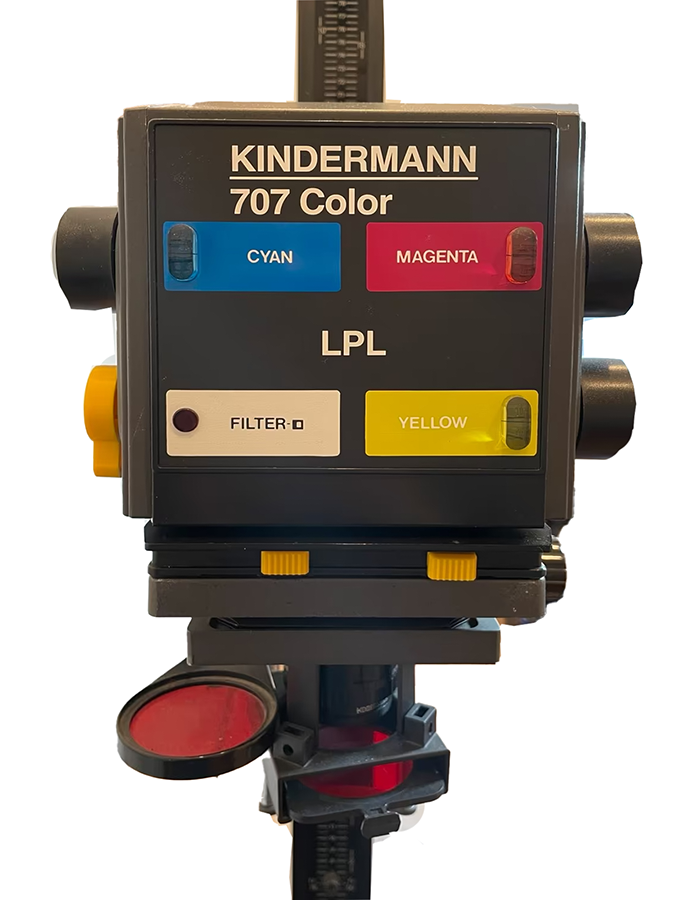
Analogue methods of image editing:
- Darkroom techniques: In classic photography, dodging or burning is used to specifically influence the brightness and contrast in an image.
- Retouching: Negatives and prints were edited with fine brushes, pens or airbrushes to remove skin blemishes, dust or scratches.
- Photomontages: As early as the 19th century, several negatives were combined or sections were joined together to create new image content.
- Chemical processes: Different developers or toners changed the colour effect and atmosphere of the images.
- Solarisation and pseudo-solarisation: This effect was also used extensively in pop art.
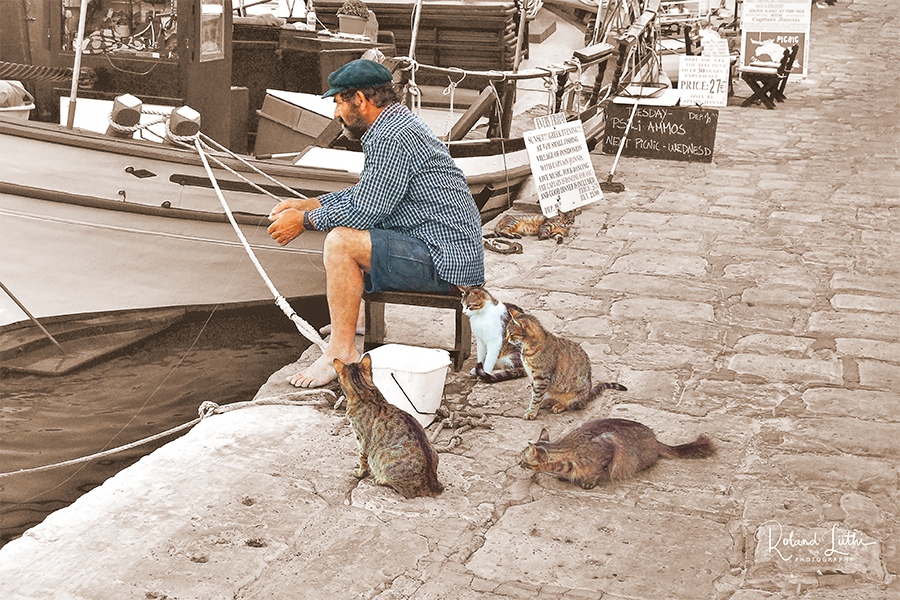
- Colourisation: What is now called colour keying is the imitation of hand-coloured photographs from earlier times.
The difference today:
While analogue techniques required a lot of time, craftsmanship and access to special laboratories, digital tools are fast, precise and available to almost everyone. As a result, image editing is now more visible and ubiquitous – which also intensifies the public debate about authenticity.
Conclusion:
Image editing is not a modern manipulation, but has been part of photography since its origins. However, the core of the discussion has hardly changed: it is not about the existence of editing, but about the question of how extensively it is used and for what purpose. Everyone knows this from their training: at the beginning of any training programme, you do things you don't like doing. But you don't like doing these things because, at the beginning of the training, you don't recognise the purpose of these activities. This is exactly how you should approach the subject of image editing: you do it because it is part of the learning process. Only if you are open to new things can you develop further.


