
A buzzword meets film history reality
In today's world of digital moving images, the term ‘cinematic look’ has become an omnipresent buzzword. Social media tutorials promise to achieve it in five minutes, camera manufacturers advertise it, and content creators talk almost religiously about ways to make their videos ‘more cinematic’. The term serves as a collective term for everything that ‘somehow looks like cinema’: wide, soft, warm, dramatic.
But this modern usage is historically inaccurate. In its more than 120-year history, cinema has never had a uniform visual standard. On the contrary, it has been a constant laboratory of formats, techniques and aesthetics. Any attempt to define the ‘cinematic look’ as something fixed fails because of the enormous plurality of film history.
To understand why this look never existed, one must look to where today's ideas are often derived from: the technical diversity of formats in the 1950s and 60s, the era in which widescreen cinema was born – and yet was anything but homogeneous.
1. The historical origin of the confusion: widescreen as an icon
When people talk about ‘cinematic’ today, they usually mean two things:
- A wide image format – often 21:9 or artificially generated black bars.
- A shallow depth of field – the subject in focus, the background blurred.
Both are legitimate aesthetic tools, but neither of them is exclusive to ‘cinema’. And neither can be traced back to a single technical standard or a visual constant in film history.
The reason: even the widescreen, so often equated with ‘cinematic’, was by no means uniform. Rather, it was a race between different companies, formats and philosophies, all of which produced different looks.
2. The era of diversity: five systems, five worlds
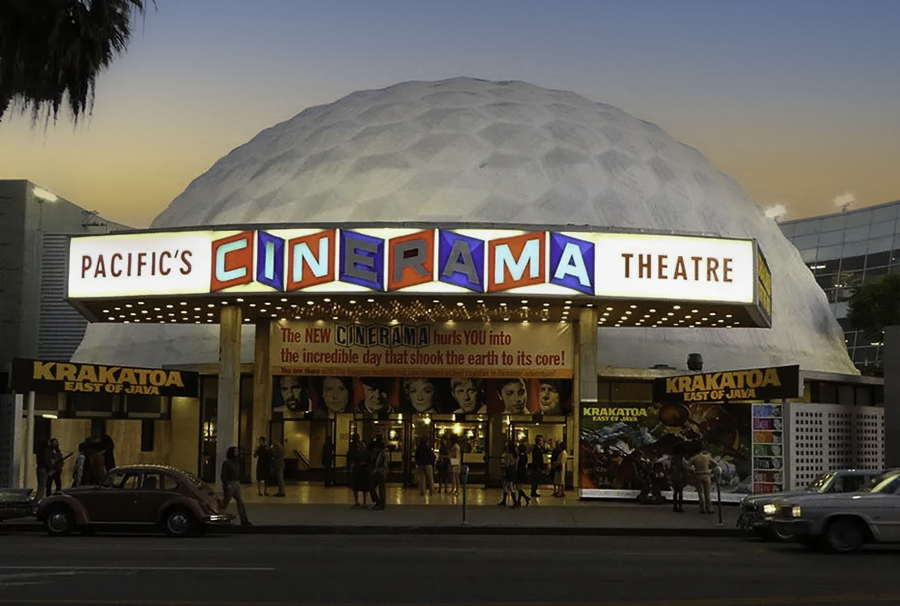
2.1 Cinerama – The illusion of the gigantic
When ‘This Is Cinerama’ (Warner Brothers and Metro Goldwyn & Mayer) premiered in 1952, audiences experienced a cinema event of unprecedented proportions:
- Three cameras, three projectors
- An extremely wide 2.59:1 image
- A curved screen that literally enveloped the viewer
- Visible transitions (‘join lines’) and perspective distortions
Cinerama was spectacular and immersive – but by no means elegant or uniform. It looked more like a technical marvel full of quirks.
2.2 CinemaScope – The anamorphic lens and its artefacts
In response, 20th Century Fox introduced CinemaScope in 1953:
- Anamorphic distortion during recording and projection
- 2.35:1 to 2.39:1 aspect ratio
- Typical image characteristics: horizontal bokeh, distortion at the edges, soft focus
CinemaScope had an iconic look – but it was prone to optical instability and sometimes blurring. None of this resembles the smooth ‘cinematic’ aesthetic of today's YouTube era.
2.3 Todd-AO – Large format as a promise of quality
Todd-AO was a revolution:
- 70mm film, enormous image area
- High sharpness, stability and fine grain
- Less distortion, more brilliance
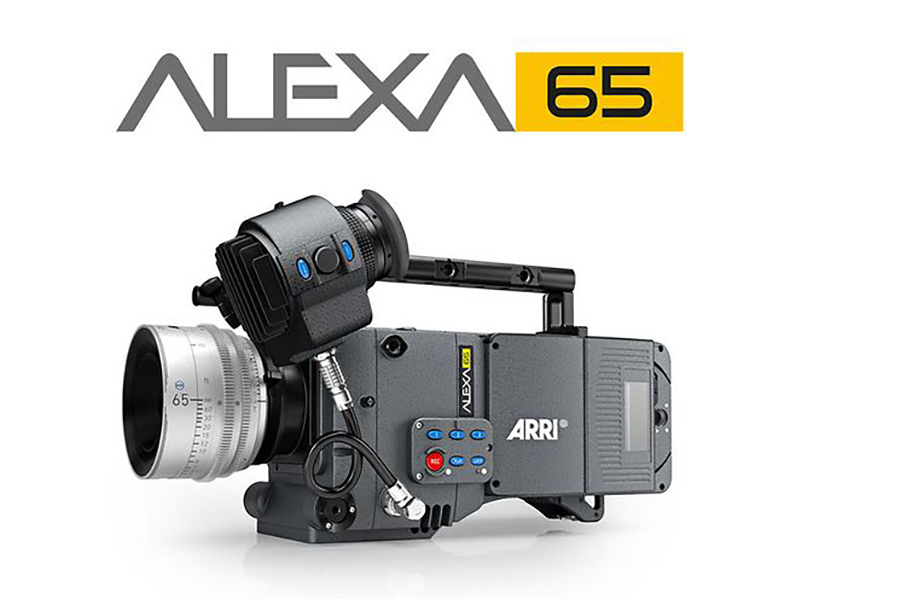
Visually, it was diametrically opposed to CinemaScope: razor sharp instead of anamorphically soft, stable instead of distorted. It very quickly replaced the Cinerama system at Warner Brothers and MGM. Later, Panavision™ produced a combination of Todd-AO and Cinemascope, which enabled production companies to save on film. In digital, only the ARRI Alexa 65™ (Arnold & Richter Munich) remains today, which comes very close to Todd-AO with its 65mm sensor.
2.4 VistaVision – Horizontal for more negative space
VistaVision (Paramount) ran 35mm film horizontally through the camera:
- Almost double the negative space
- Very fine grain
- High level of detail
- Particularly popular for VFX shots (e.g. in Star Wars)
This also results in a completely individual look that cannot be compared to Cinerama or CinemaScope.
3. The problem with the modern term: standardising an inconsistent medium
3.1 Film aesthetics are historically variable
The visual language of Hollywood films of the 1930s differs drastically from that of the 1950s, 1970s or the digital present.
Consider:
- the saturated Technicolor colours of the 1940s
- the grainy New Hollywood aesthetic of the 1970s
- the smooth 35mm images of the 1990s
- the cool digital grades of the early 2000s
- or the hyper-controlled blockbuster looks of the present day
By definition, there can be no uniform ‘cinematic look’ because cinema is not a homogeneous medium.
3.2 Today's ‘cinematic look’: a culturally popular simplification
What is often considered ‘cinematic’ today is a kind of visual meme:
- Cinematic bars
- Shallow depth of field
- Low saturation
- Soft light
- Film grain
- Slow camera movements
- Bokeh aesthetics
It is an aesthetic algorithm, not a historical concept.
It works because it uses certain elements that (through cultural habituation) appear ‘cinematic’. But it does not represent any historical cinema format, neither CinemaScope nor Todd-AO.
4. Why the myth lives on
4.1 Marketing and myth-making
Camera manufacturers benefit from the term:
‘Our camera produces a genuine cinematic look,’ they say. The fact that this look has never been uniform is deliberately ignored – a simplification that benefits marketing.
4.2 The viewing habits of the digital generation
Most viewers today do not experience film in different analogue formats, but as homogenised digital streams:
- without grain
- without projection artefacts
- without format changes
- without visible differences between camera systems
This blurs much of the historical diversity.
4.3 Psychology of the term
In the collective understanding, ‘cinematic’ means:
‘big,’ ‘high-quality,’ ‘dramatic.’
It has become an expression of quality, not a technical one.
5. The irony: the modern cinematic look would not have been considered cinematic in the past
Many modern ‘cinematic presets’ would have been considered atypical or even mistakes in film history:
- insufficient depth of field
- excessive desaturation
- artificial grain
- digital film errors
- horizontal lens flares
The look of the 2020s is therefore more of a new aesthetic, based on nostalgia for a cinema that never existed.
6. Conclusion: Cinema is diverse – and that is its strength
The ‘cinematic look’ is not a historically tangible concept, but a modern abstraction.
In reality, there are only:
- cinematic looks,
- cinematic traditions,
- cinematic techniques,
but no uniform visual standard.
The true looks of cinema are the creative signatures of filmmakers, the technical peculiarities of their time, and the diversity of formats that make film so rich.
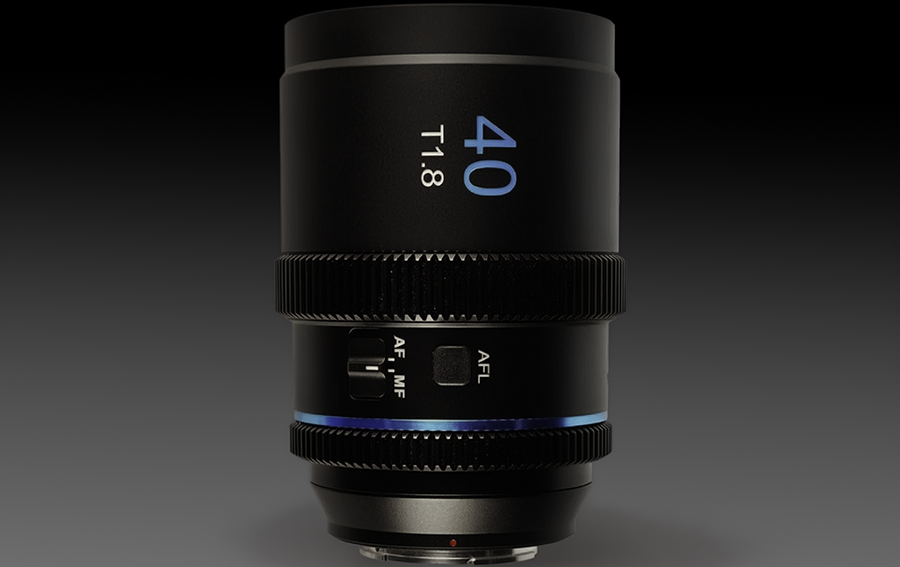
When people talk about a ‘cinematic look’ today, they mean something else – a modern ideal, a visual feeling, an artifice. But not a historical fact. Based on this knowledge and the vitality of the film market, it is also understandable that many camera manufacturers are quite hesitant to integrate the OpenGate standard. OpenGate already existed in the film era, with the SuperScope developed by brothers Nathan and Fred Tushinsky, but it never caught on. Apart from Canon, only manufacturers who are primarily active in the TV market offer OpenGate. However, inexpensive anamorphic lenses are already available on the market. In 1980, a 40mm anamorphic lens still cost tens of thousands of dollars, but today you can get one for less than £1,000. Prices will fall even further once such anamorphic lenses can be produced in large quantities. While OpenGate can be integrated into cameras with a firmware update, Cinemascope technology is tied to hardware, which also requires adjustments to the viewfinder via firmware. It is therefore understandable that Nikon and RED are still waiting, as optical adjustments are cheaper to implement than wasting additional time in post-production each time.


