
The invisible architecture of photography
Lines are among the most powerful compositional elements in photography. They are often invisible in everyday life, but have an enormous effect in images: they direct the gaze, structure surfaces, create depth and convey emotions. Those who work consciously with lines gain control over the image's effect and the viewer's visual experience.

1. The role of lines in photographic perception
People unconsciously follow lines in images – our eyes find it easy to move along shapes. Lines therefore serve as visual signposts: they lead into the image, guide us to important elements or shape the entire composition.
They also contribute to spatial orientation, give the image stability or dynamism, and create an order that makes the image more understandable or exciting.
2. Types of lines in photography
2.1 Horizontal lines
- Appear calm, balancing, stable
- Convey harmony, vastness and relaxation
- Typical in landscape photography (horizon lines, water surfaces)
Design tip: The position of the horizon changes the message of the image: above → emphasis on the foreground; below → emphasis on the sky.
2.2 Vertical lines
- Create strength, height, power
- Often dominant in architectural and nature photography (trees, columns, skyscrapers)
Design tip: Slightly inward-sloping verticals in architectural photographs can be used deliberately or straightened by correcting the perspective.
2.3 Diagonal lines
- Diagonal lines represent movement, dynamism and direction. They lend images energy and tension – but their effect depends heavily on the reading direction, which in Western culture runs from left to right.Diagonal from top left to bottom rightThis direction corresponds to the usual reading flow, which is why it has a harmonious effect and ‘draws the viewer into the motif’.
- Naturally draws the eye into the image
- Is perceived as pleasant and inviting
- Supports a flowing image composition
Diagonal from top right to bottom left
- Draws the viewer's eye out of the image
- Often appears tense or unstable
- Can unintentionally become a visual exit point
To prevent a diagonal in this direction from ‘escaping’, it should be interrupted or intercepted by a strong motif, a shape, an object or a direction of movement.
This ‘captivates’ the viewer's gaze and prevents them from leaving the image too early.
2.4 S-curves and curved lines
- Particularly aesthetic, organic and soft
- Appear elegant and inviting
- Often found in nature photographs (rivers, paths, hills)
Design tip: The classic S-curve gently draws the eye into the image and is ideal as a leading line.
2.5 Converging lines
- Lines that move towards a single point
- Create a strong sense of depth
- Typical: roads, rails, building edges
Design tip: Set the vanishing point deliberately – centrally for symmetry, to the side for tension.
2.6 Imaginary lines
Not all lines need to be visible. Lines of sight, movements or arrangements of objects also create imaginary lines that influence the composition.
3. Lines as design tools
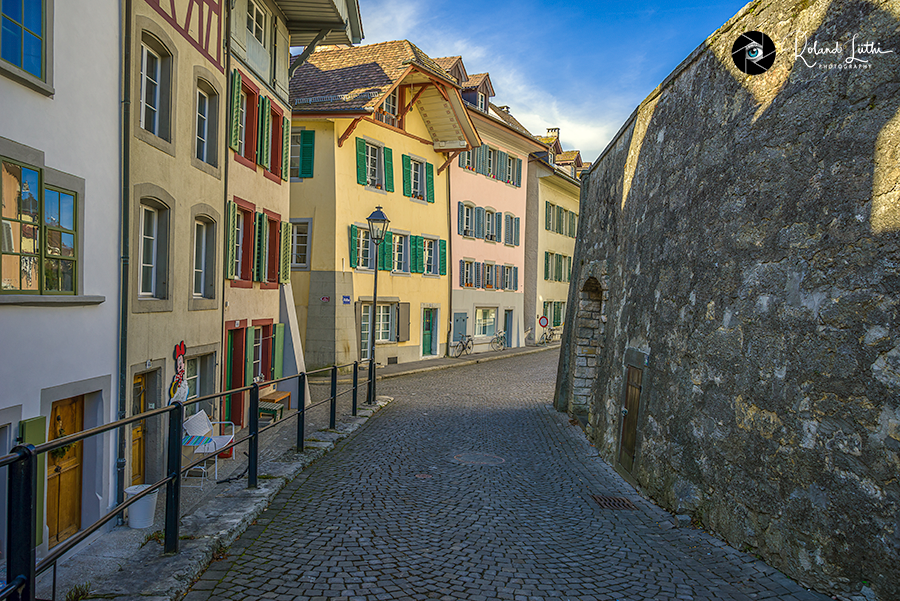
3.1 Leading lines
Leading lines are lines that guide the eye to a specific motif.
Examples
- Paths or footbridges that lead to a person
- Railings or wall edges
- Streaks of light in night photography
They are among the most powerful compositional aids.
3.2 Lines for structuring images
Lines can separate or connect areas, define spaces or structure image areas.
Examples:
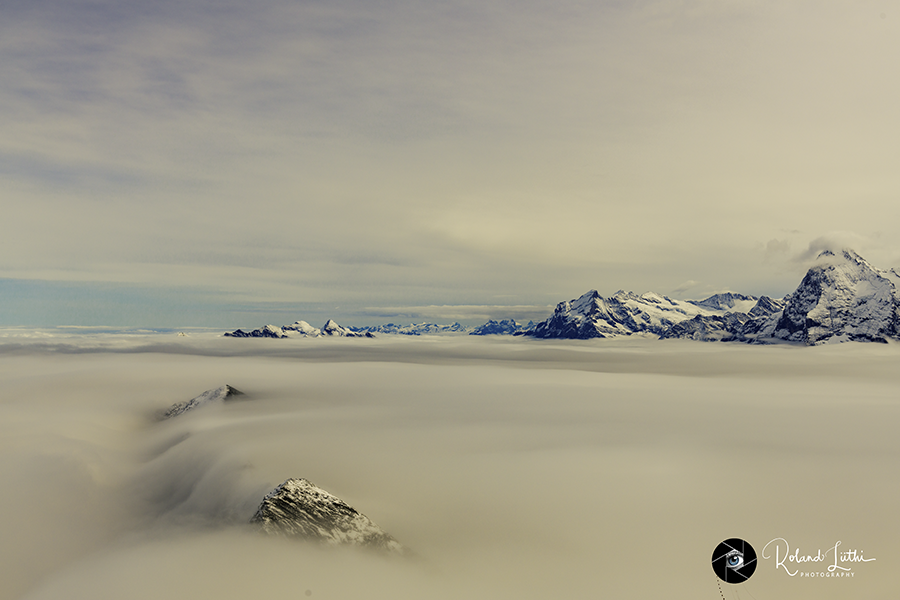
- A horizontal line divides the sky and landscape
- A diagonal line separates two areas of colour
3.3 Lines for mood and emotion
- Horizontal lines → calm
- Vertical lines → strength
- Diagonals → restlessness/dynamism
- Curves → harmony, softness
Lines therefore have not only a formal effect, but also an emotional one.
3.4 Lines and minimalism
Single, clear lines can carry a minimalist image. They provide structure without overloading the image and enhance the effect of negative space.
4. Practical tips for photographic use
Walk around instead of zooming: Often, a small change in perspective completely changes the lines in the image.
Look for depth: Lines that lead into the distance give images three-dimensional depth.
Avoid clutter: Too many competing lines can make an image restless.
Break lines deliberately: A dominant line that is interrupted can create tension.
Use contrasts: Lines have a stronger effect when they stand out clearly through light, colour or shape.
5. Conclusion
Lines are the invisible architecture of photography – subtle but powerful. Those who recognise them and use them deliberately can control the effect of an image and tell stories more clearly. Whether dynamic, calming, guiding or structuring, lines shape the composition of an image and turn a snapshot into a well-thought-out photographic work.


