
How the trend towards film photography could trigger new innovations
Analogue photography has been experiencing a remarkable renaissance in recent years. Young photographers are discovering film cameras – often out of curiosity, often out of a desire to slow down – and in doing so are bringing technologies, ways of thinking and workflows back into consciousness that had long been considered obsolete. But this trend is much more than a nostalgic play with retro optics. It has the potential to inspire digital photography both technically and conceptually.

Modularity: an old idea with new relevance
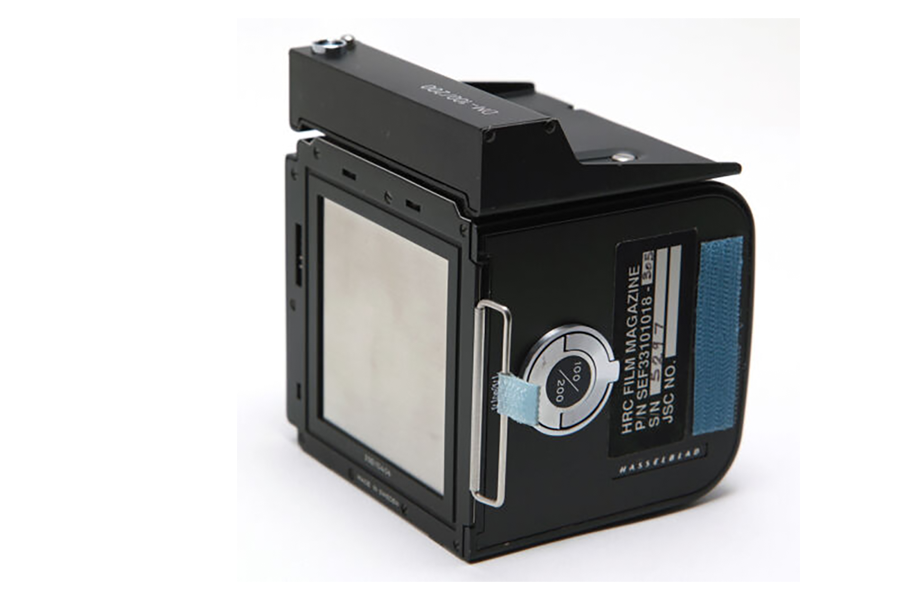
The history of photographic technology shows how fruitful modular concepts can be. The earliest cameras consisted of individual, interchangeable components – lenses, bellows, backs. This principle reached its iconic peak in the 20th century with Victor Hasselblad: the legendary medium-format cameras offered interchangeable magazines, interchangeable viewfinders and interchangeable image formats.
The key feature was that a single camera body could perform completely different technical tasks. You could switch from colour negative film to slide film, from black and white to instant film – and even the recording format could be flexibly adjusted by using a different magazine.
This idea of controlled variability has been partially lost in the digital world. Modern cameras are closed systems. Sensor, viewfinder, electronics – everything is permanently installed. If you want more, you have to buy a new model.
But given today's rapid sensory innovations, a return to modular concepts could make sense again.
Why modular digital cameras would make sense right now
Digital cameras have reached a paradoxical situation today:
the sensor determines the longevity of an entire system. While lenses can be used for decades, the sensor becomes obsolete after a few years – whether due to higher resolution, better dynamics or optimised data processing.
A modular system could create balance here:
1. Interchangeable sensor modules
Instead of replacing an entire camera, a system similar to Hasselblad film magazines could work:
- Standard bodies with durable mechanics and interfaces
- sensor backs that can be exchanged as needed
- Choice between high-ISO sensor, high-resolution module or particularly fast cine sensors
For professionals, this would be economically and technically attractive – for manufacturers, a sustainable, service-oriented approach.
2. Interchangeable viewfinders and displays
AR/EVF technologies in particular are creating new scope for innovation:
- Classic optical viewfinders
- High-resolution EVFs for studio work
- Modular displays for video setups
3. Flexible housings for different applications
Studio, reportage, outdoor – a basic housing with several ‘front ends’ or ‘control modules’ would be conceivable.
Cinema and television as catalysts
Modularity already exists in the film and television industry, for example in RED cameras, whose sensors can be exchanged in certain systems. But even there, the modular concept has never been fully implemented at the sensor level.
With ever-higher resolution standards – 8K, 12K and beyond – sharing a camera system with an interchangeable sensor would be highly attractive to production companies.
A camera-internal ‘Hasselblad moment’ for the video world could significantly accelerate the transition to new standards.
Why the young analogue generation could be a catalyst
The current analogue trend is producing a generation of photographers who
- value craftsmanship,
- understand haptic systems,
- and are accustomed to modular work processes.
The experience of changing film and thus inserting a completely different medium creates an understanding of flexible image capture processes that can be rethought in digital photography.
A young person using an analogue Hasselblad or Mamiya for the first time today intuitively experiences what modular systems can achieve: freedom, control and a more intense relationship between tool and image.
This way of thinking could fuel demand for modular digital cameras in the future – perhaps more than purely technological trends ever could.
Conclusion: analogue photography is not a step backwards – it points the way forward
The trend towards analogue photography is not an escape into yesterday, but a catalyst for tomorrow.
It reminds us that cameras can be more than closed black boxes with fixed components.
As young photographers rediscover modular technologies, a pressure to innovate could emerge that will revolutionise digital photography in the long term – towards systems that are more flexible, sustainable and future-proof.


