
Why true harmony lies in the golden ratio
In many photography courses and on YouTube, it is taught like a magic spell: the rule of thirds. An image, it is said, appears more exciting and harmonious when divided into nine equal fields and the essential motifs are placed at the intersections. For beginners, this is a simple trick, a grid that provides certainty. But those who truly understand art know that this is not a law, but only a rough approximation of something much deeper – the golden ratio.
More than geometry – the golden ratio
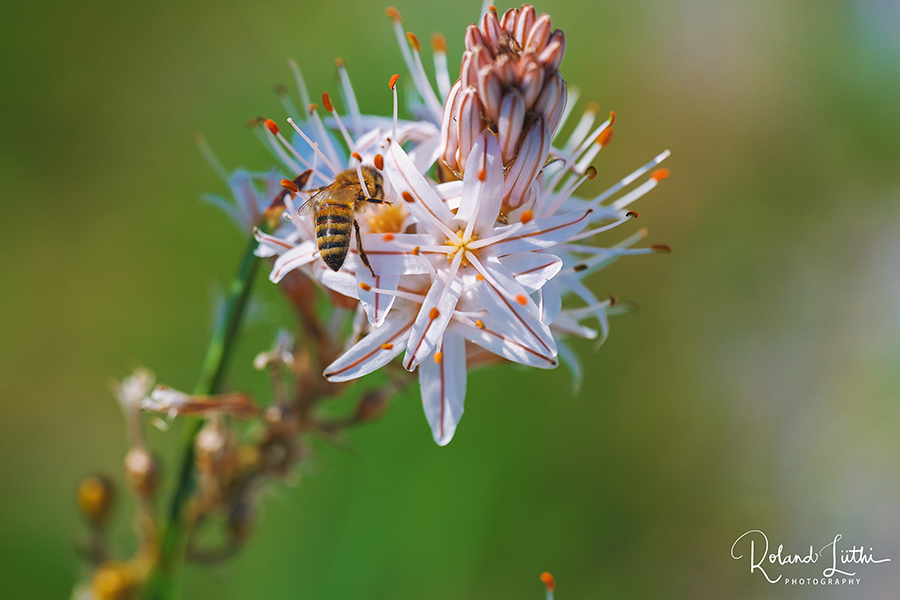
The golden ratio is not a pattern that you simply superimpose on an image. It is a principle that has been found in nature, architecture and art for centuries. It describes a ratio that is neither random nor mathematically rigid, but creates a harmony that we intuitively sense. Snail shells, petals, even the spirals of galaxies follow this mysterious measure. No wonder the great masters of art history – from Leonardo da Vinci to Dürer – based their works on it.
Rule of thirds: A helpful framework for beginners
The rule of thirds is practical, no question about it. If you are just starting out, it can help you take better pictures quickly. But it is a crutch – helpful at the beginning, but a hindrance if you want to walk freely and confidently. This is because the lines of the rule of thirds only approximate the golden ratio. True elegance comes when you train your eye to see the more subtle proportions instead of clinging to rigid grids.
Cartier-Bresson and the poetry of proportion
Henri Cartier-Bresson, the great master of the ‘decisive moment’, never composed according to the rule of thirds. His images are filled with balance, tension and lightness – carried by the golden ratio. He spoke of the ‘geometry of composition’, of an inner order that remains invisible to the viewer but nevertheless immediately captivates them. For him, photography was not a technique, but a dance with space and time, and the golden ratio was the invisible metronome.
The path to freedom
So if you really want to learn to see, you should soon leave the rule of thirds behind. It is a starting point, not the goal. The golden ratio teaches us that harmony is not created by a rigid grid, but by a sense of balance, rhythm and tension. It encourages us not to measure, but to feel.
True art begins where rules disappear and intuition takes over. The golden ratio is not a tool to be ticked off, but a key to a deeper, more poetic view of the world – an invitation to create images that not only please, but also move us.


