
In photography, the standard lens is considered one of the most important lenses of all. It is often described as ‘natural’ because its image effect is very close to human vision. However, there is one crucial point that is often misunderstood: a standard lens is not defined by a fixed focal length, but by its angle of view.
But it is precisely this human visual impression that makes it the perfect lens for beginners in photography. When looking through the viewfinder, you usually forget to check whether there is a better location. With the standard lens, you get used to working like an artist, first scanning the scene with the naked eye to set the scene for your subject.
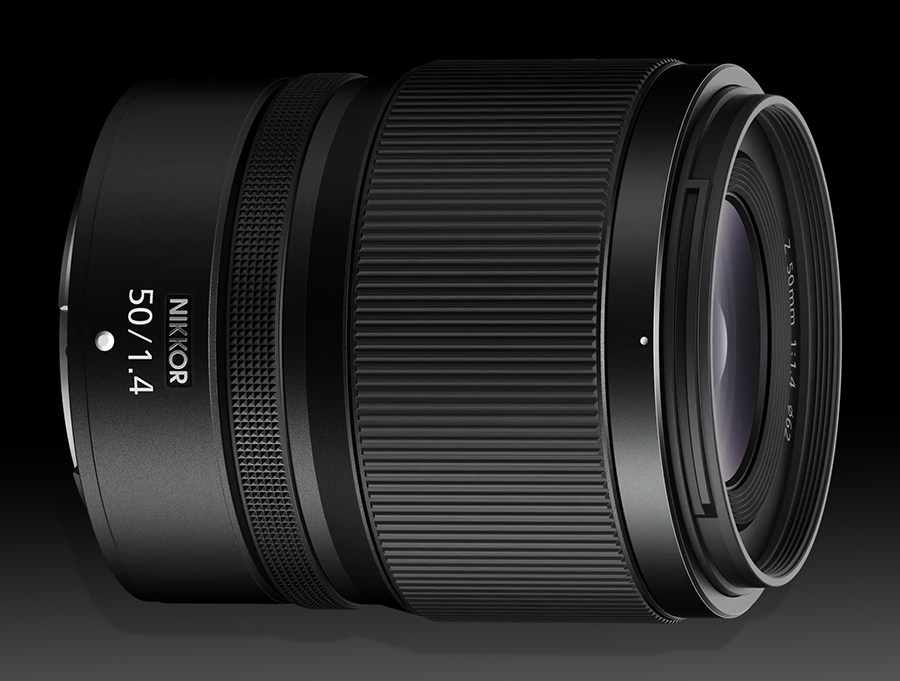
The image angle as a benchmark
The image angle describes how much of a scene a lens can capture. A standard lens is designed so that this image angle corresponds to the subjective impression of human vision – neither significantly wide-angle distorted nor strongly telephoto compressed.
It is important to note that
the same image angle can only be achieved with different focal lengths for different sensor or film sizes.
That is why a standard lens is:
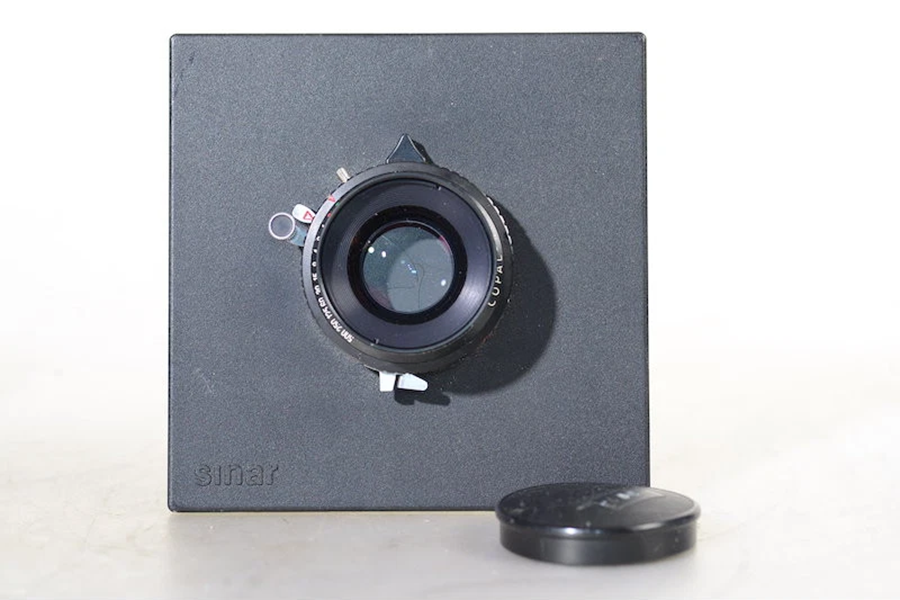
- For medium format 80 mm
- For 35 mm (full frame) approximately 50 mm
- For APS-C approximately 35 mm
- For Micro Four Thirds approximately 25 mm
All of these lenses deliver a very similar angle of view – even though their focal lengths are different.
Relationship between sensor size and focal length
The reason for this lies in the geometry of the image format. The image angle depends directly on the diagonal of the sensor or film. The larger the sensor, the larger its diagonal – and the longer the focal length must be to produce the same image angle.
This is where mathematics comes into play.
The image diagonal and Pythagoras' theorem
The diagonal of a rectangular sensor can be calculated using Pythagoras' theorem:
Image diagonal = √(width2 + height2).
This image diagonal is crucial because:
The focal length of a standard lens corresponds approximately to the image diagonal of the image format.
Example: medium format
- Negative size: 60 mm × 45 mm
- Diagonal: 3600+2025≈75 mm [√(602 + 452 ) ≈ 75mm]
So why is an 80 mm lens considered standard?
Historically and practically, it has been shown that focal lengths slightly above the diagonal provide a particularly natural perspective and are optically easier to construct. That is why 80 mm became the classic standard in medium format. In 35 mm full format, the image diagonal is 43.3 mm, which is why 50 mm is the standard lens. Only one of the manufacturers of 35 mm cameras deviated from this 50 mm standard, namely Konica (Konshiroku) with its 47 mm standard lens. The Konica FT-1 Motor was the first 35 mm SLR camera to be sold with a 47 mm standard lens.
Conclusion
The standard lens is not a fixed numerical value, but a concept based on the angle of view. The focal length of a standard lens always depends on the sensor or film size and can be derived geometrically from the image diagonal.
Anyone who understands this relationship will recognise:
- why ‘50 mm’ is only a standard lens in full format,
- why smaller sensors require shorter focal lengths,
- and why the image angle is the decisive criterion – not the focal length alone.
This makes the standard lens a perfect example of how optics, perception and mathematics interact in photography.
The standard lens is the ideal tool for beginners as a fixed focal length lens because, in addition to its intuitive use, it is usually also quite fast.


