
Digital photography now offers more creative possibilities than ever before. Although modern cameras work with automatic programmes, the basic camera settings remain crucial for image composition and quality. It is particularly important to understand the difference between RAW and JPEG images – because this determines which settings are critical at the time of shooting and which can be easily corrected later.
1. The exposure triangle: ISO, aperture, shutter speed
Aperture (f-value)
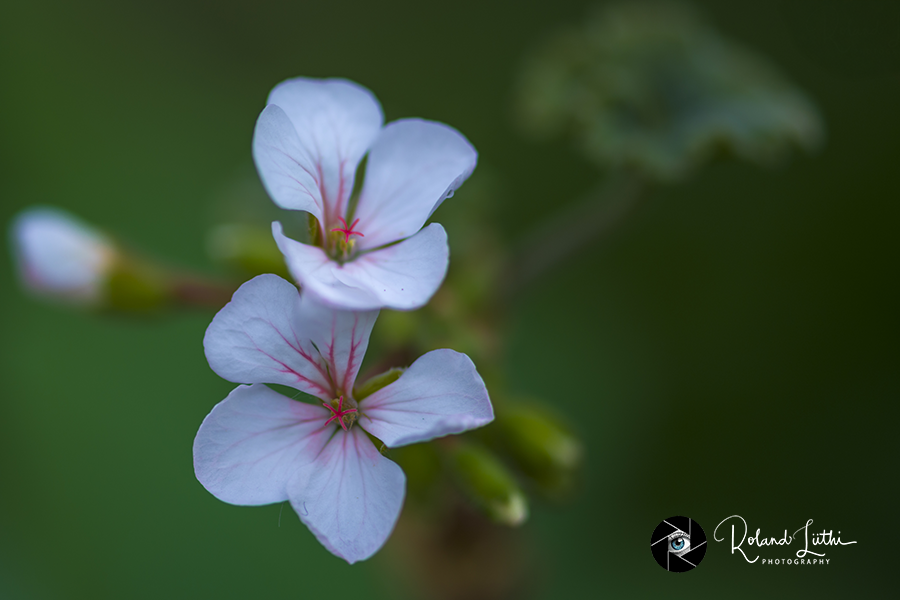
- Small number (f/1.8, f/2.8): lots of light, shallow depth of field, strong bokeh.
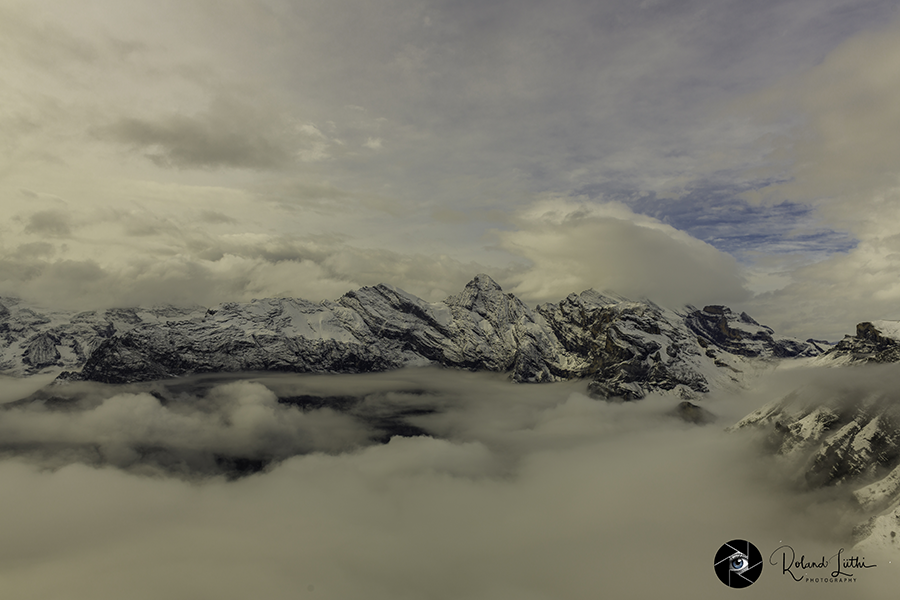
- Large number (f/8, f/11): less light, high depth of field. Practical application: portraits with open aperture, landscapes with closed aperture.
Tip: It's easy to remember the aperture setting because it's actually a fraction. So f/16 is actually 1/16, or one sixteenth. This means that 1/16 (0.0625) is smaller than 1/8 (0.125) and less than 1/2.8 (0.375).
Shutter speed
- Short (1/1000): freezes movement.
- Long (1/30 to several seconds): motion blur or long exposures. Practical tip: use a tripod for long exposures.
ISO
ISO controls light sensitivity. In digital photography, however, this is not done on the recording medium (sensor) as in analogue photography (film), but by amplification in the image processor.
- For JPEG: ISO has a decisive influence on the image. High ISO leads to noise, which can only be corrected to a limited extent. The noise is roughly equivalent to the grain in analogue photography.
- With RAW: ISO is partially flexible. Although the camera increases the analogue signal before digitisation, exposure and tonal values can be corrected much better in the RAW converter because the linear sensor data set is available with high bit depth.
2. RAW vs. JPEG – a crucial difference for camera settings
RAW files
- 12–14 bit colour depth → enormous reserves in shadows and highlights
- ISO and white balance are stored as metadata in the header
- White balance can be changed without loss
- Exposure corrections of 2–4 f-stops are often possible
- No internal camera compression or image processing
Important: The ISO value continues to influence the analogue amplification of the sensor. Nevertheless, the brightness can be flexibly adjusted in the RAW converter without the typical artefacts of a JPEG.
JPEG files
- 8 bits per channel → only 256 tonal values
- All camera settings are irreversibly calculated
- White balance can only be corrected to a limited extent
- Over- or underexposure can only be corrected to a limited extent
- Camera-internal processing determines the look
Conclusion: ISO and white balance are critical settings for JPEG, but can be corrected flexibly for RAW.
3. White balance – colour mood and correction reserves
For RAW
Thanks to 14-bit data, the white balance can be freely selected afterwards. The camera only stores one reference point (Kelvin + Tint), but the software is not bound to this.
With JPEG
The white balance is fixed in the image. Corrections quickly lead to:
- Colour breaks
- Banding
- Unnatural colour casts
4. Focus modes – Setting the focus precisely
AF-S / One Shot
For stationary subjects.
AF-C / AI Servo
For moving subjects, continuous tracking.
AF-A
Automatic mode – flexible but less precise solution.
With focus fields (single field, zone, face/eye detection), the camera can decide what should be in focus in the image.
5. Exposure metering & histogram
The camera offers various metering methods:
- Matrix/multi-field metering for general situations
- Centre-weighted for portraits
- Spot metering for difficult exposures
- Highlight-weighted metering prevents highlights from being blown out
The histogram is the most reliable method for assessing over- and underexposure – especially with RAW.
6. Other useful settings
- Image stabilisation: prevents camera shake
- Continuous shooting mode: for fast action
- Self-timer or remote shutter release: especially for long exposures
- Exposure compensation: quick fine-tuning
Conclusion
Working with RAW gives you maximum creative freedom: white balance and ISO are only guidelines for the software and can be adjusted precisely afterwards. With JPEG, on the other hand, these parameters must be set at the time of shooting. In both cases, aperture, shutter speed and focus remain the fundamental tools for successful photos. Aperture and shutter speed have the greatest impact on the image result. With an open aperture, I can isolate the main subject and use the shutter speed to freeze or visualise movement. However, if you want to control the image effect, you should avoid automatic exposure and set the exposure manually.


