
Focus is one of the key creative tools in photography. It determines which details of the subject are in focus in the image and how clear and precise a photo appears. Modern cameras offer sophisticated autofocus systems for this purpose, but classic manual focusing aids continue to play an important role – especially in creative, analogue or specialised photography. In the early days of photography, this was done on the focusing screen, which is why a black cloth was attached to the back of the camera. This allowed the photographer to check the focus on the focusing screen with a magnifying glass.

Manual focusing
Basic principle of manual focusing
With manual focusing, the focus is set directly on the focusing ring of the lens. The photographer decides for themselves what distance to focus on. This method requires practice, but offers maximum control – for example in macro photography, portraits with a shallow depth of field or in low-light situations where autofocus systems reach their limits.
Microprism ring
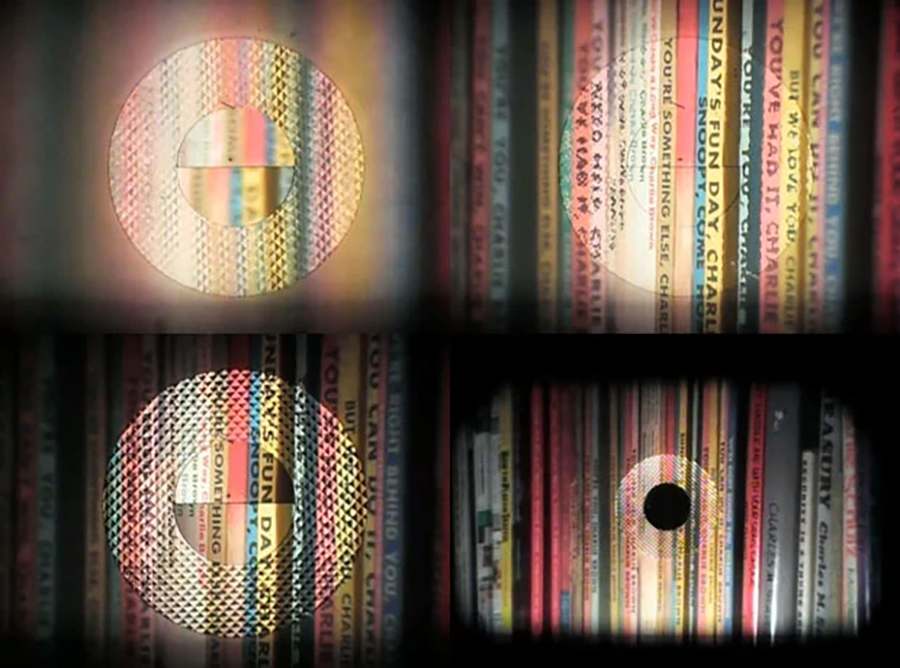
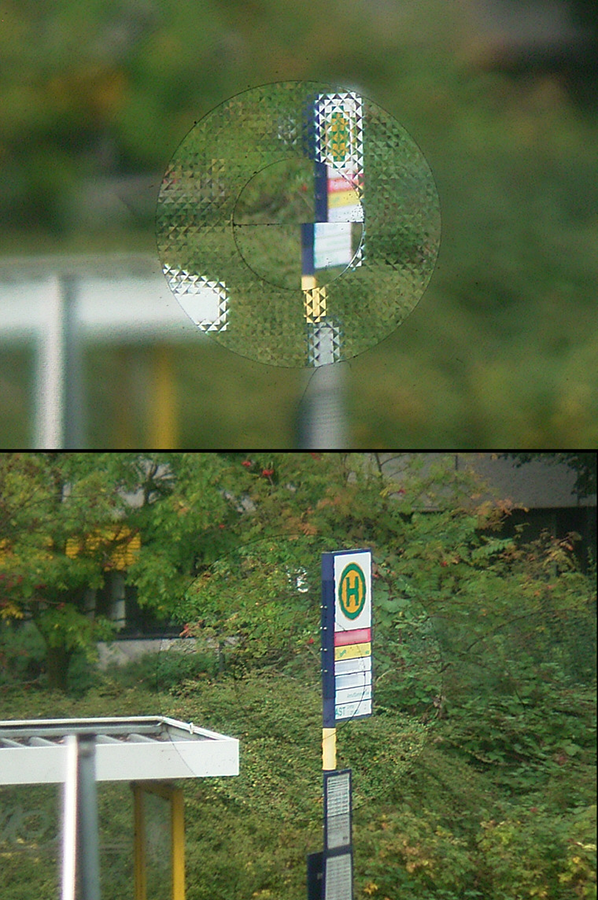
The microprism ring is a classic focusing aid found primarily in analogue SLR cameras, but also in some modern manual viewfinder systems. It consists of many small prismatic elements that cause the image in the viewfinder to flicker or appear blurred until the focus is set correctly.
Once the focus is correct, the subject is displayed clearly and steadily in the microprism ring. This method is particularly effective for high-contrast subjects.
Split-image indicator
The split-image indicator (also known as a split-image wedge) is usually located in the centre of the viewfinder. It divides the subject into two halves.
If the object is out of focus, straight lines in the subject appear offset or broken. Turning the focus ring brings the two halves of the image into alignment. Once they are exactly on top of each other, the subject is in focus.
This technique is particularly precise and is ideal for architectural, product and portrait photography.
Focus peaking
What used to be microprism rings and split-image indicators in old analogue cameras is now focus peaking in modern DSLM cameras. Coloured markings help the photographer to shift the focus to the important parts of the subject.
Autofocus systems
Modern cameras have complex autofocus systems that combine speed, precision and subject tracking. Depending on the shooting situation, different autofocus modes are available.
Single autofocus (AF-S / One Shot AF)
This mode focuses once when the shutter button is pressed halfway. The focus remains fixed until the photo is taken.
Area of application: Landscapes, still lifes, architecture, portraits with static subjects.
Continuous autofocus (AF-C / AI Servo)
Continuous autofocus continuously adjusts the focus as long as the shutter button remains half-pressed. Moving subjects are tracked and refocused.
Area of application: Sports, animals, action, street and event photography.
Automatic autofocus (AF-A / AI Focus)
Here, the camera itself decides whether to use single or continuous autofocus. If it detects movement, it automatically changes the mode.
Area of application: Fast, unpredictable situations – but with less control for the photographer.
Focus fields and metering methods
In addition to the autofocus modes, various focus field options can usually be selected:
Single-point AF: Maximum precision, ideal for targeted image composition
Multi-point or zone AF: Camera selects suitable metering fields itself
Tracking AF: Tracks a selected subject in the image
Eye and face detection: Particularly popular in portrait photography
Manual or automatic – which is better?
The choice between manual and automatic focusing depends largely on the photographic situation and personal style. While autofocus is fast and convenient, microprism rings and split-image indicators provide direct, visual feedback and encourage more conscious work with focus and image composition.
Many professional photographers deliberately combine both methods to achieve both precision and efficiency.
Conclusion
Focus adjustment is much more than a technical necessity – it is a creative tool. Whether using modern autofocus technology or classic focusing aids such as microprism rings and split-image indicators, those who master the various methods can control their photographic expression in a targeted manner and create images with a clear visual impact.


