Blog
The Zone System – Control over light and tonal values in photography
The zone system is a photographic concept developed to control exposure and development in such a way that a subject is reproduced with all the desired tonal values – from deep black to brilliant white. It was developed in the 1930s by Ansel Adams and Fred Archer and was mainly used in black-and-white photography.
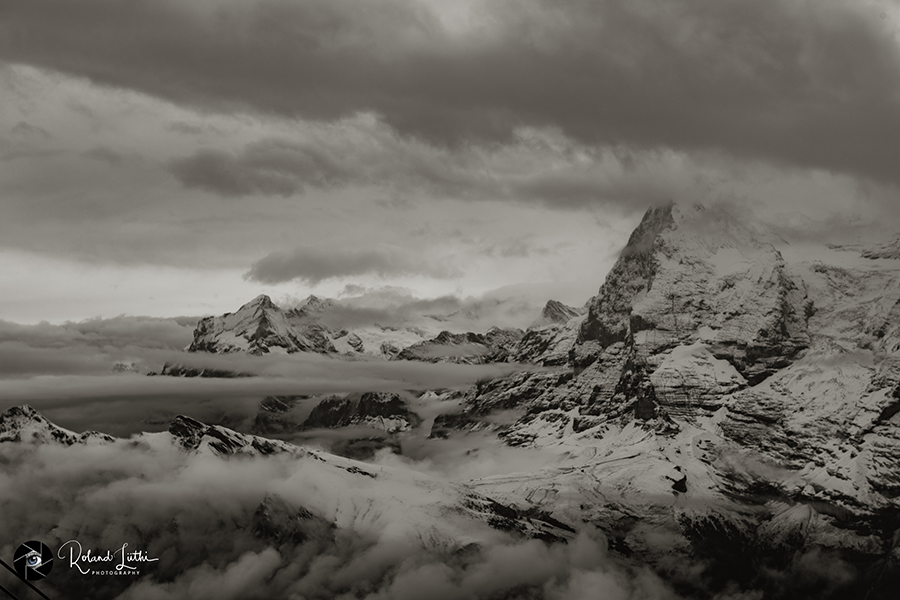
Ansel Adams' photographs from Yosemite National Park. Hardly anyone knows how much effort Ansel Adams put into these photographs. He still used a view camera, which took a long time just to set up.
Read more: The Zone System – Control over light and tonal values in photography
Camera settings in digital photography – explained in detail
Digital photography now offers more creative possibilities than ever before. Although modern cameras work with automatic programmes, the basic camera settings remain crucial for image composition and quality. It is particularly important to understand the difference between RAW and JPEG images – because this determines which settings are critical at the time of shooting and which can be easily corrected later.
Read more: Camera settings in digital photography – explained in detail
High key and low key in photography
Two stylistic devices with a big impact
In photography, high key and low key shots are among the most exciting lighting styles when it comes to conveying emotions and controlling the impact of an image. Both techniques play with extreme brightness ranges, but lead to completely different results.

The histogram in photography
Benefits, interpretation and critical points
The histogram is one of the most important tools in modern digital photography. It provides a graphical representation of the brightness and colour distribution in the image and helps photographers to assess exposure and contrast more objectively than by simply looking at the camera display. But as helpful as it is, the histogram can also be misleading if you don't know its limitations.
The two-triggering on cameras
One of the most common problems I encounter in my workshops is the question of why my camera's autofocus fails so often. You have the most modern camera with eye autofocus, but rarely are the eyes in focus. My answer is always the same: because the camera doesn't know when the photographer wants to press the shutter release. The camera's shutter release is actually a two-step process. The mistake lies precisely in how you release the camera.