
Blog
Photographing like in the old days
You always meet interesting people at photography events. So do Elvis and Miha Halilović, two Slovenian designers. Together they founded the company Ondu Pinhole in Velenje, Slovenia, in 2013, which mainly produces pinhole cameras that do not require expensive optics.
However, they have recently started producing fully-fledged view cameras. They acquired a taste for the large format through the Ondu Pinhole 4x5 inch. The 4x5 inch format has the advantage that you get a postcard-sized picture with a contact print. The brothers hesitated for a long time because the view camera presented them with problems. But they found the solution to all their problems and there are now 3 models in the Eikan series.

Taking photos with your smartphone and tablet
The best camera is always the one you have with you. But did you know that your smartphone and tablet can do more? The integrated camera app that comes with your smartphone and tablet only does JPEG. However, the camera sensor can do more. JPEG images are only 8 bits, but the sensor can do 16 bits with a colour depth of 14 bits. These 8 bits mean 28 = 256 colours can be displayed. Whereas the sensor can capture 214 = 16384 colours. This means that data is used very wastefully. Once data is lost, it can no longer be recovered. So get the maximum out of your sensor, I'll show you how.

Adjusting focus in photography
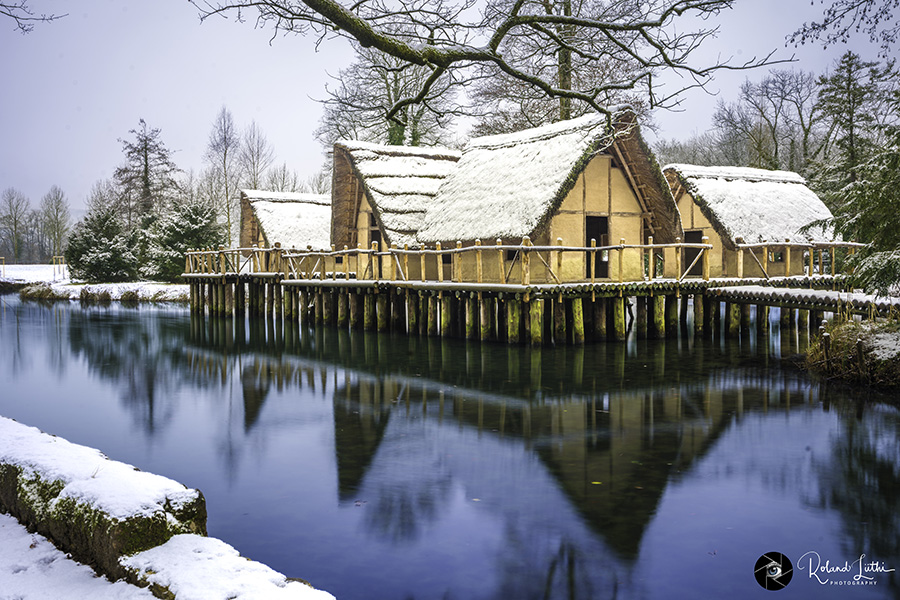
Focus is one of the key creative tools in photography. It determines which details of the subject are in focus in the image and how clear and precise a photo appears. Modern cameras offer sophisticated autofocus systems for this purpose, but classic manual focusing aids continue to play an important role – especially in creative, analogue or specialised photography. In the early days of photography, this was done on the focusing screen, which is why a black cloth was attached to the back of the camera. This allowed the photographer to check the focus on the focusing screen with a magnifying glass.
Basics of exposure metering
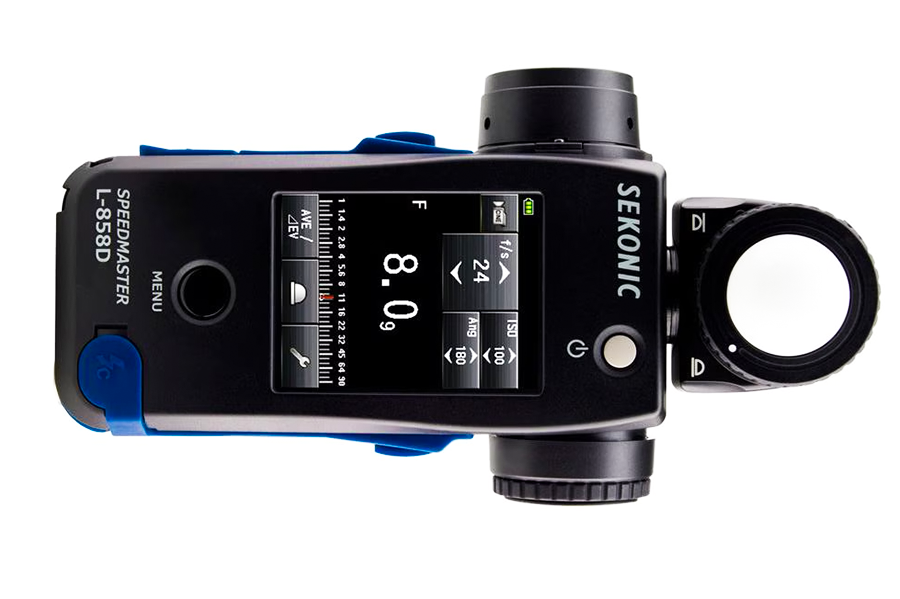
Exposure metering is a fundamental technique in photography, regardless of whether you are working with analogue or digital cameras. While digital cameras provide support in the form of histograms and instant feedback, analogue photography requires a much more conscious and forward-thinking approach. Errors cannot be detected immediately, which is why precise metering is crucial.
Especially in extreme situations – such as strong backlighting or very high subject contrast – the camera's internal metering is often insufficient. This is where a handheld exposure meter often comes in handy.
The standard lens – defined by the angle of view, not by the focal length
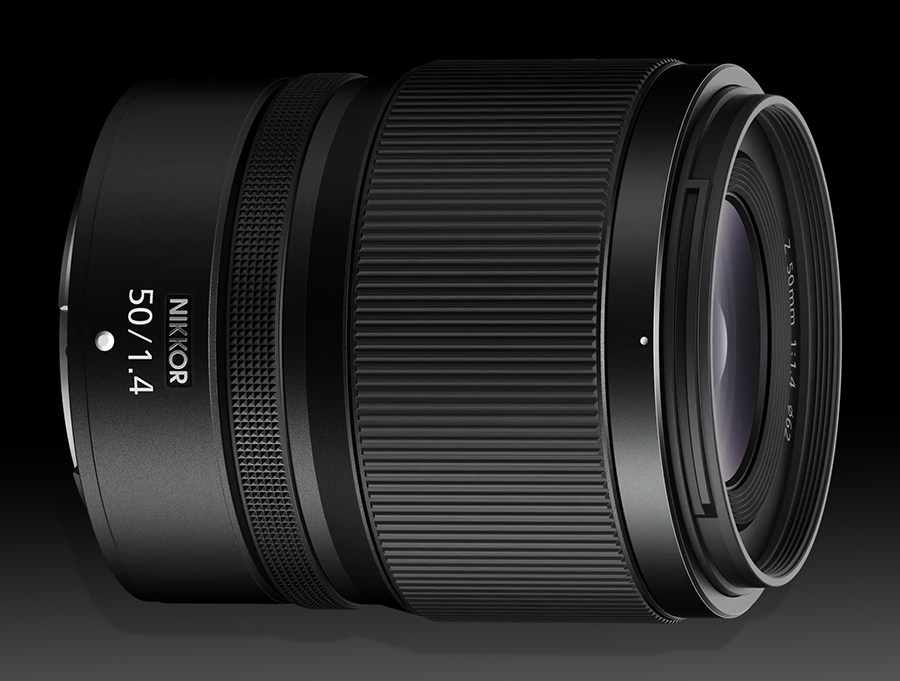
In photography, the standard lens is considered one of the most important lenses of all. It is often described as ‘natural’ because its image effect is very close to human vision. However, there is one crucial point that is often misunderstood: a standard lens is not defined by a fixed focal length, but by its angle of view.
But it is precisely this human visual impression that makes it the perfect lens for beginners in photography. When looking through the viewfinder, you usually forget to check whether there is a better location. With the standard lens, you get used to working like an artist, first scanning the scene with the naked eye to set the scene for your subject.
Read more: The standard lens – defined by the angle of view, not by the focal length


